Cherish Your Memories and Applaud the Success of Others

Mitch Arnold • September 27, 2026

Recently, one of my friends completed a hike of the Appalachian Trail, 2198 miles of mountain paths from Georgia to Maine. He hiked almost continuously from March 31 to September 17, wearing the shoes of his son who passed away unexpectedly late last year.


Not only is my friend an intensely driven and passionate individual, he is also a talented photographer who has crafted a career around his art. He used that talent to document his journey, capturing views that most eyes will never see and small wonders that most would miss. As I followed his adventures online, I felt wonder and awe, as well as gratitude that I could witness something that I will never see in person.


Life is like that. Few of us will ever do everything we want to do, and we’ll watch from the sidelines as others enjoy something that we can only dream of. The trick is to do that without jealousy and envy, which are the thieves of gratitude and peace, and it’s something that I occasionally struggle with.


Sometimes it seems that almost everywhere I look I am reminded of things beyond my reach. From my social media feeds to the walls in my house, reminders of dreams cut short threaten to haunt me, if I let them.


With the help of some enthusiastic friends and the patience of an accommodating wife, I enjoyed several good years of pursuing my passion for hunting. Before my disability took that away from me, I was blessed to hunt in Africa and Canada, as well as many amazing places in the United States. The trophies that hang on my wall fill me with memories that I am thankful to have, but there are also blank spots that I had envisioned filling with more trophies. They remind me that I can no longer hunt like that.


My social media feeds reinforce that frustration. Not only do I see friends enjoying their hunts and outfitters with whom I have hunted guiding smiling clients to their dreams, I am also a member of several online communities who share the same passion. There, I see trophy rooms that I dreamed of having and hunts I dreamed of experiencing. Where I once looked for inspiration and ideas, I now see a fantasy world.


Then, there are the travel posts, like my friend’s trek on the Appalachian Trail. I see people standing on mountain tops, rafting on rivers and exploring the coastline of Greece – all things that I wish that I could do. Sadly, that world no longer exists for me, and that makes it all the more important that I be grateful for what I have and rejoice in the successes of others.


I am learning to look past the blank spots on my walls and instead focus on the trophies that I am very fortunate to have. Why spend time and emotion on what I don’t have when I can appreciate all that I do have? Likewise, why waste energy on jealousy and envy when I can look with wonder and awe on the experiences of others?


No matter who you are, what you have and what you have been blessed to experience, there is someone who would like to walk in your shoes, if only occasionally, and they would be truly puzzled if you weren’t filled with gratitude. Just as important, experience as much of this life as you possibly can and share your experiences with others. Lastly, don’t torment yourself by worrying about things beyond your reach. Be thankful and rejoice in your life and the lives around you.

By Mitch Arnold • July 26, 2026
When facing challenging situations, my go-to response is often “it could be worse.” It’s raining: it could be worse. We could be scooping this stuff. It’s hot outside: it could be worse. At least we have air conditioning. The “it could be worse” response is a simple and common way of putting things into perspective, summoning at least a modicum of gratitude and showing the absurdity of petty complaining. Unfortunately, it can also blind us to the potential of “it could be better.” I say it aloud frequently when I am with people, but I also mutter “it could be worse,” to myself when I am alone and struggling with my mobility. That simple phrase has brought me peace and acceptance, as I have experienced progressive physical challenges throughout most of my entire adult life. While things could definitely be worse, and I’m right to summon gratitude when negativity creeps in, I was recently reminded that sometimes things could be better, and if that’s possible, I should do everything I can to make them better. For more than 40 years, I have lifted weights five to six times per week, and that has allowed me to maintain a fairly active lifestyle, but lifting alone isn’t cutting it anymore. Despite frequent exercise, I have struggled to get around more than usual for the past year or so, and that has made my world even smaller. Despite this, I persisted with a positive attitude and told myself, “it could be worse.” Not until the discomfort and limitations began to prevent me from doing things I should be doing, like meeting friends for breakfast, did I consider the possibility that things could be better. Making sure that I realized this was my wife Lynda who had been on me to try physical therapy, since my primary physician wrote a prescription for it a year and a half ago. I resisted because, though I am positive about almost everything else, I was pessimistic about what modern medicine could do for me. I had done physical therapy as a child, and have undergone several medical procedures that did little to improve my condition and seemed to provide only frustration. How was this going to be different? But it was. After only two sessions and a daily regimen of stretching and purposeful movement over the past four weeks, plus the strength training, I have already improved my mobility. Stairs are easier and walking, less painful and troublesome. That has greatly helped my energy level, focus and confidence. Even when I fell and sprained my ankle a couple of days ago, the recovery was easier. While things could definitely be better, they could also be much worse, as they were for me a month or so ago. Had I not relented and at least considered the possibility that things could be better, I would have continued being unnecessarily limited. Are you unnecessarily limited? If you are going through a difficult period in your life – maybe your job or a relationship isn’t as fulfilling as it once was – consider the possibility that things could be better. Always lean into gratitude for what you have, but don’t let resignation obscure options for improvement.
By Mitch Arnold • May 25, 2026
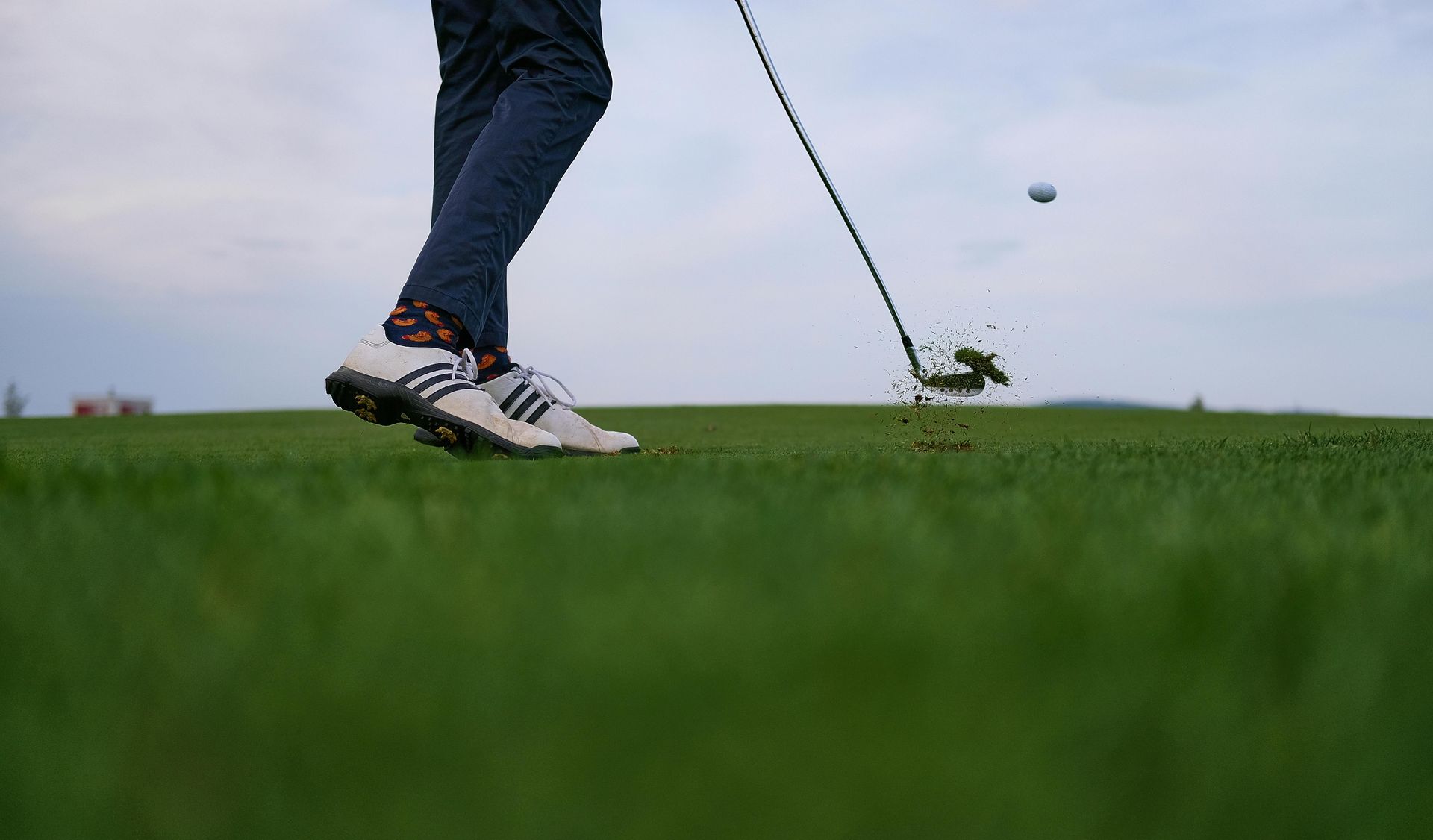
Recently, as occasionally happens when I watch the golfers on the course behind my home, I caught myself thinking about what it would be like to be out there again. Only this time, I also thought about the cost of golf, and began calculating how much I’ve saved by not golfing over the past 20-some years. Of course, I would rather golf than have the money I saved by not golfing, but due to a physical disability that increasingly limits my life, that isn’t an option. Thus, instead of fretting about something I can’t change, I comforted myself with math and tested my mastery of the positive explanatory style . With green fees, cart and the obligatory cold beverages, I estimated that each round would have cost me around $75. If I got out twice per month over five months of relatively nice Nebraska weather, I would golf approximately ten rounds per year, for a cost of $750. Multiply that by 20 years, and I’ve saved $15,000 or the cost of a pretty nice motorcycle. I used to ride motorcycles too, but haven’t been able to do that in more than 30 years. If I were still riding motorcycles, I figure that I would have probably had at least two during that time. Factoring in taxes, insurance and maintenance, I estimate that I’ve saved nearly $50,000 by not riding motorcycles for the past three decades. I also haven’t used a comb or paid for a haircut in nearly 30 years. However, unlike golf and motorcycles, that has nothing to do with my disability and everything to do with my genetics. Still, by avoiding monthly haircuts at $20 a pop, I’ve been able to save over $7000. I share this exercise with you not to try to talk you out of spending money on the things that bring you happiness, quite the opposite actually. You should absolutely do the things you love while you still can. In almost all cases, the money you spend on experiences is an investment in your life, and you owe it to yourself to get the most out of life that you can. Most of us, at some point in our lives, will lose the ability to do the things that once brought us happiness, and all that we will have left will be the memories. When that happens, we should cherish the memories of all that we have experienced, and look for other outlets to enhance our lives. Travel now fills the gaps once occupied by golf and motorcycles. With the help of my wife and some incredibly supportive friends, I’ve been able to visit some remarkable places like Charleston and Nashville, and enjoy unforgettable experiences, like a Green Bay Packers football game and the NCAA Final Four. Admittedly, travel gets a little more difficult each year, but that only increases my urgency to do more of it and enhances my gratitude of what I can still do, because I know that, some day, if I live long enough, I’ll be calculating the money I’m saving by not travelling. Television writer and producer Taylor Sheridan agrees, as you can see in this clip from the Paramount+ series, The Madison. https://www.youtube.com/shorts/tydIBHknM_s Don’t wait until everything is in order to invest in experiences. Accept the golf invitation. Buy the motorcycle. Take the trip. Prioritize making memories while you still can, because some day, those memories are going to be more valuable than whatever you have in the bank.